

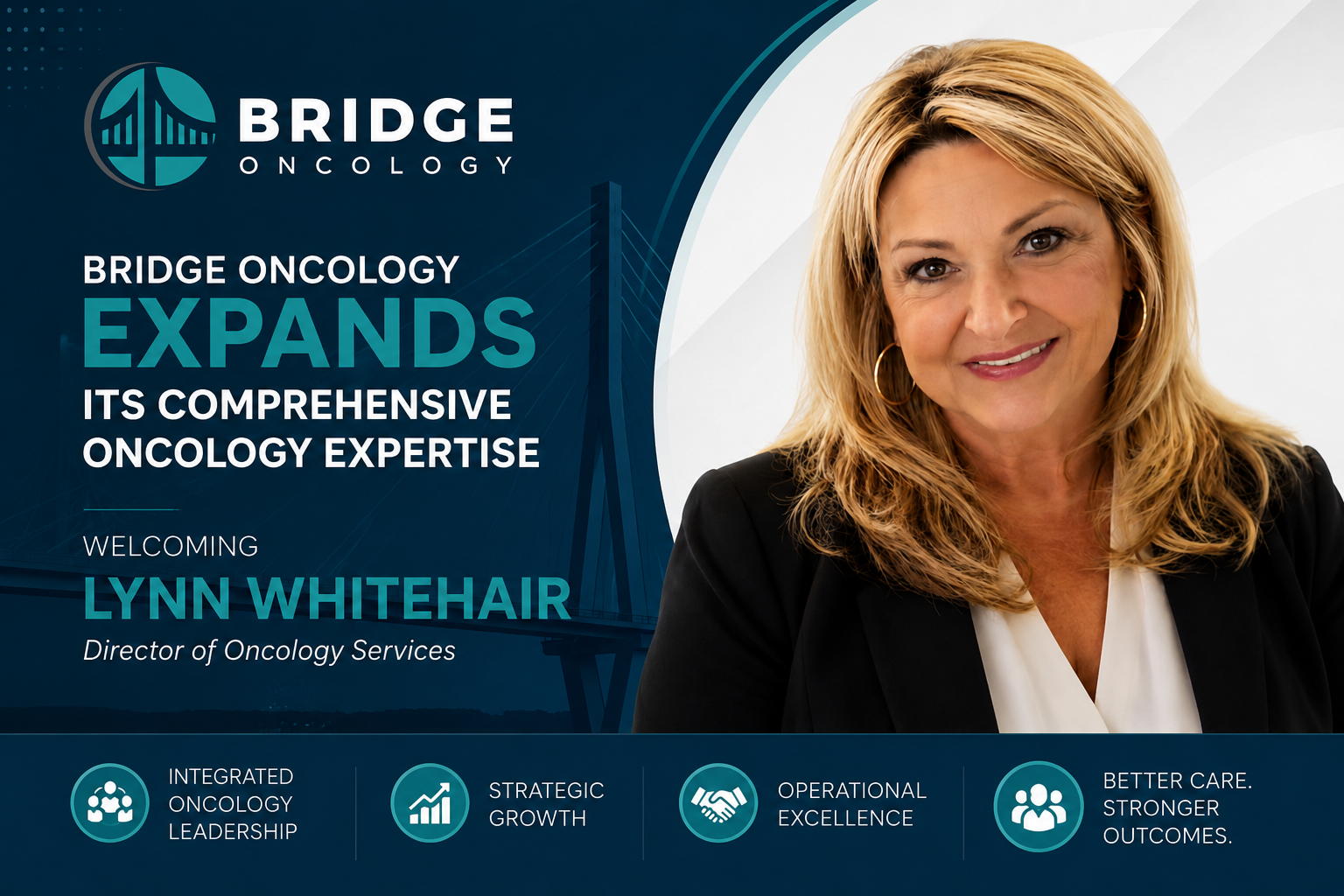
Bridge Oncology Expands Beyond Radiation Oncology: Why the Addition of Lynn Whitehair Signals the Future of Integrated Cancer Care
For years, Bridge Oncology has been known for solving some of the most complex challenges in radiation oncology. From reimbursement reform and revenue integrity to compliance, policy, AI strategy, staffing, and clinical operations, we have helped hospitals and physician groups navigate an increasingly difficult healthcare environment.
Today, however, oncology is changing.
The problems facing health systems no longer exist within a single department. They span the entire cancer enterprise.
That is why the addition of Lynn Whitehair, MBA, ACHE, as Director of Oncology Services represents much more than a leadership announcement. It represents the next evolution of Bridge Oncology and our vision for the future of oncology transformation. Lynn brings more than 25 years of executive oncology leadership, including senior operational roles at Emory Winship Cancer Institute, Baylor Scott & White, and Memorial Hermann, with extensive experience leading complex oncology service lines across academic and community health systems.
Oncology Can No Longer Operate in Silos
Historically, hospitals have managed radiation oncology, medical oncology, infusion, pharmacy, imaging, surgery, revenue cycle, and administration as separate departments.
Patients never experience care that way.
Neither do payers.
Nor does CMS.
As reimbursement shifts toward value, site neutrality, enterprise accountability, and integrated care models, organizations that continue operating in isolated service lines will struggle to remain financially sustainable.
The future belongs to organizations that can coordinate every aspect of cancer care—from diagnosis through survivorship—with shared operational strategy, financial accountability, and clinical governance.
That is exactly where Bridge Oncology is headed.
Expanding From Department Expertise to Enterprise Strategy
Bridge Oncology was founded with deep expertise in radiation oncology because that specialty has historically required significant operational, reimbursement, and compliance support.
Over the past several years, however, our work has naturally expanded.
Today our teams are engaged in projects involving:
- Radiation oncology transformation
- Medical oncology operations
- Infusion center optimization
- Pharmacy strategy
- Theranostics development
- Revenue cycle management
- Prior authorization redesign
- AI implementation and governance
- Clinical staffing models
- Service line growth strategies
- Mergers, acquisitions, and Professional Services Agreements
- Compliance and legal strategy
- Data analytics and operational intelligence
Healthcare organizations increasingly need one partner that understands how every piece fits together—not multiple consulting firms working independently.
Lynn’s experience strengthens our ability to deliver exactly that.
Building Oncology Programs Instead of Solving Individual Problems
Many consulting firms focus on isolated issues:
- Improve billing.
- Reduce denials.
- Increase patient volume.
- Optimize staffing.
- Prepare for accreditation.
Those are important objectives.
But none of them solve the larger challenge.
The organizations that will thrive over the next decade will be those that intentionally design integrated oncology programs where clinical operations, finance, technology, compliance, and physician leadership work together.
That is the model Bridge Oncology has been building.
Lynn’s operational leadership complements our expertise in reimbursement policy, healthcare law, data analytics, AI, and clinical operations, creating a team capable of supporting oncology service lines from strategy through implementation.
What This Means for Our Clients
For hospitals, health systems, and physician groups, this expansion means access to a broader set of expertise under one organization.
Bridge Oncology can now support clients across the entire oncology continuum, including:
- Medical oncology
- Radiation oncology
- Infusion services
- Oncology pharmacy
- Theranostics
- Operational assessments
- Workforce planning
- Service line expansion
- Financial modeling
- Revenue integrity
- Compliance
- Enterprise oncology strategy
Rather than addressing one operational challenge at a time, we help organizations build sustainable cancer programs designed for the reimbursement, workforce, and regulatory realities of the next decade.
The Direction of Bridge Oncology
Healthcare is changing rapidly.
Cancer care is changing even faster.
CMS continues to signal greater integration, site-of-service reform, AI adoption, enterprise accountability, and value-based reimbursement. Organizations that wait for these changes to fully materialize will find themselves reacting instead of leading.
Bridge Oncology is intentionally building a multidisciplinary team that reflects where oncology is going—not where it has been.
The addition of Lynn Whitehair is another step in that journey.
Our mission remains the same: helping hospitals and physician groups improve patient access, strengthen financial sustainability, and deliver exceptional cancer care.
The difference is that today, we are doing it across the entire oncology enterprise.
Because the future of oncology will not be built department by department.
It will be built by organizations capable of integrating every aspect of cancer care into one coordinated strategy.